
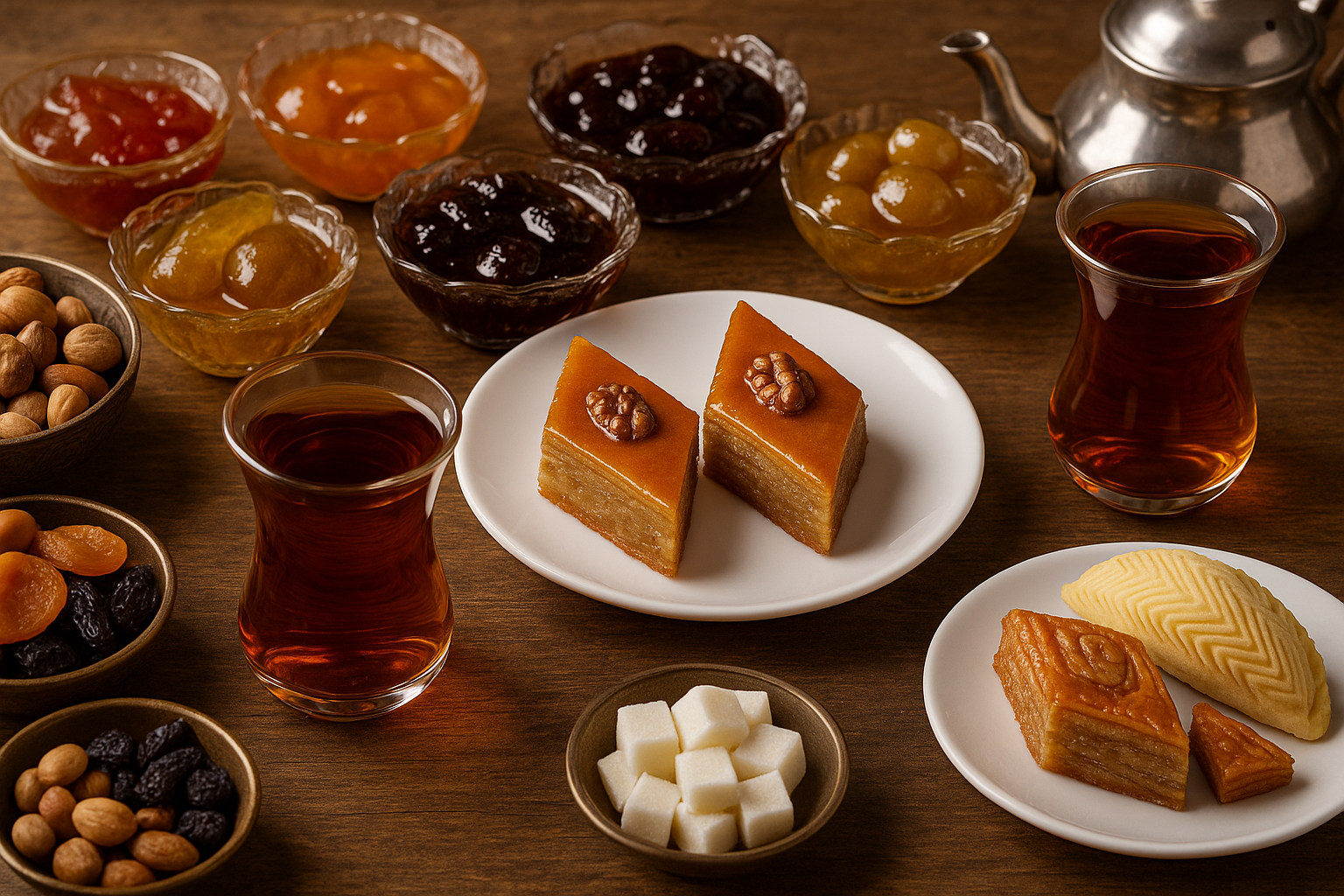
In Azerbaijan, tea is not a moment in the visit.
It is the background of the visit.
It starts when you arrive, continues while you talk, reappears after food, shows up again if someone baked something new, celebrates something, and somehow keeps coming without ever being announced as a second round.
Tea does not interrupt hospitality. It is hospitality.
Tea is also one of the clearest expressions of how hospitality shapes everyday language. I explored that broader connection in Understanding Azerbaijani Hospitality Through Language.
Tea Is Always Present
Tea is offered:
- When you arrive
- While you are settling in
- After the main meal
- With dessert
- With something newly baked
- When you start a new topic
- While you’re studying
- Sometimes simply because time passed
There is no “right time” for tea. If people are together, tea belongs there.
That’s why many Azerbaijani conversations unfold around tea rather than over tea.
How Sugar Is Actually Used
Sugar is not mixed into the tea.
Traditionally:
- A sugar cube is lightly dipped into the tea
- Then placed in the mouth
- It slowly dissolves while you drink the rest of your tea
The sweetness is subtle, gradual, and personal. Everyone controls their own balance.
This detail matters because it reflects a broader cultural pattern:
nothing is forced, everything is adjusted quietly.
Preserves: More Than a Side Dish
Tea in Azerbaijan is rarely served alone.
Alongside it, you may see preserves of every kind imaginable:
- Preserves made out of whole green walnuts
- Eggplant or tomato preserves
- Watermelon rind
- Rose petals
- And, of course, every fruit you can think of
Each spoonful is small. The variety matters more than quantity.
Preserves turn tea into a shared experience rather than a single flavor.
Pastries, Sweets, and the Table That Keeps Filling
Tea tables tend to grow.
As time passes, more things appear:
- Pastries
- Cakes
- Chocolates
- Candies
- Nuts
- Dried fruits
No one announces this either. The table simply becomes fuller.
Hospitality here is additive, not performative.
Tea in Cafés and Restaurants
Outside the home, tea still keeps its role.
In cafés and restaurants, you will often hear:
- Bir stəkan?
One glass? - Çaynik? | Loanword from Russian, but be ready to hear Azerbaijani Çaydan too. Meaning: A whole pot?
The question is not whether you want tea, but how much.
The Language That Lives Around Tea
Tea creates a space where language softens.
Phrases you hear often include:
- Buyurun: here you go
- Nuş olsun: enjoy
- Bir stəkan da süzüm: let me pour one more glass
These phrases are not dramatic. They are repeated, natural, and expected.
They don’t push. They invite.
This same softness appears in how gratitude is expressed. Phrases like sağ ol carry more warmth than a direct “thank you,” something I explored in Why Azerbaijanis Say “Sağ Ol” Instead of “Thank You”.
What Tea Reveals About Azerbaijani Hospitality
Tea culture shows how hospitality works linguistically:
- Invitations are indirect
- Generosity is continuous
- Comfort is prioritized over efficiency
- Conversation unfolds without pressure
This is why Azerbaijani hospitality feels warm without being loud.
Closing Thought
In Azerbaijan, tea doesn’t mark the beginning or the end of a visit.
It simply stays. It is ever-present.
And the language spoken around it stays just as gentle, just as layered, and just as generous.