
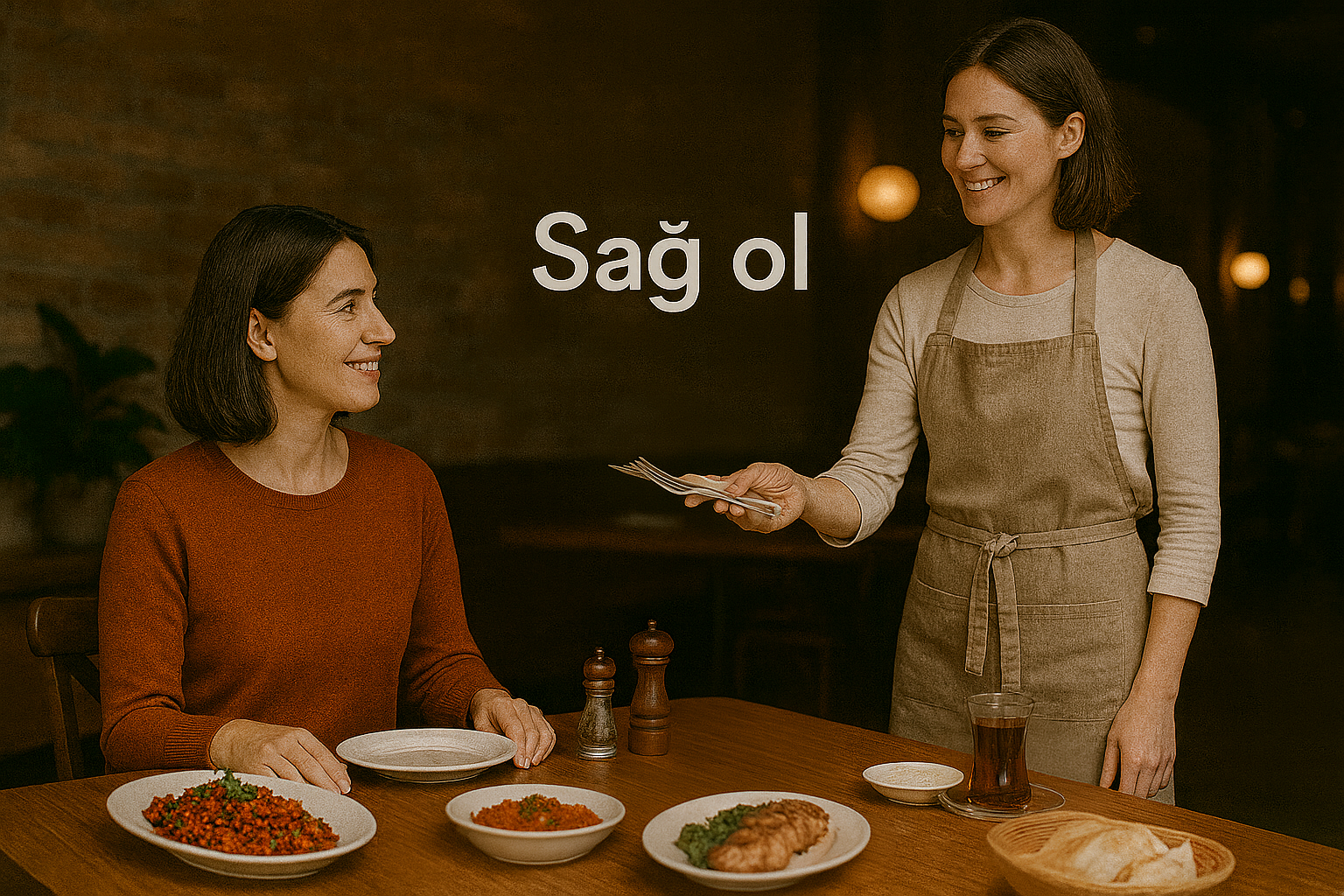
“Sağ ol” is not just politeness
If you translate sağ ol into English, you’ll almost always see thank you.
That translation works on paper.
In real life, it falls short.
Sağ ol isn’t just about gratitude. It’s about acknowledgment. About recognizing the person, not just the action.
That difference changes how conversations feel.
What “sağ ol” actually carries
Depending on the situation, sağ ol can mean:
- I appreciate this
- I see what you did
- I value the effort
- This matters to me
- I’m grateful, and I want you to know it
It can be said after help.
After advice.
After someone simply listens.
English usually needs extra words for that:
“Thanks, I really appreciate it.”
Azerbaijani compresses it into two.
Why “thank you” can sound transactional
In English, thank you often marks the end of an exchange.
You paid.
You received.
You thanked.
The interaction closes.
Sağ ol doesn’t always close a moment. Sometimes it softens it. Sometimes it keeps it human.
That’s why you’ll hear it even when nothing concrete was given. The acknowledgment itself is the point.
Tone matters more than the word
This is where learners get confused.
The meaning of sağ ol changes with:
- tone
- timing
- who is speaking
- the relationship between people
Said warmly, it builds closeness.
Said quickly, it stays polite.
Said slowly, it can carry emotion without explanation.
English often separates those into different phrases. Azerbaijani lets tone do the work.
Why this matters if you’re learning Azerbaijani
If you treat sağ ol as a direct substitute for thank you, you’ll use it correctly but miss its weight.
And people will feel that.
Understanding words like sağ ol isn’t about vocabulary size. It’s about learning how relationships are acknowledged through language.
This is also why Azerbaijani conversations can feel warmer without being verbose. A lot is carried implicitly.
You don’t need to overuse it. You need to feel it.
New learners sometimes overcorrect. They drop sağ ol everywhere.
That’s not the goal.
The goal is knowing when it fits and why it fits. Once you feel that, usage becomes natural.
Worth noticing
Languages don’t just describe actions. They reflect how people interact with one another.
Sağ ol exists because acknowledgment matters culturally, not because the Azerbaijani needed another way to say thank you.
Once you understand that, conversations stop sounding translated and start sounding human.