
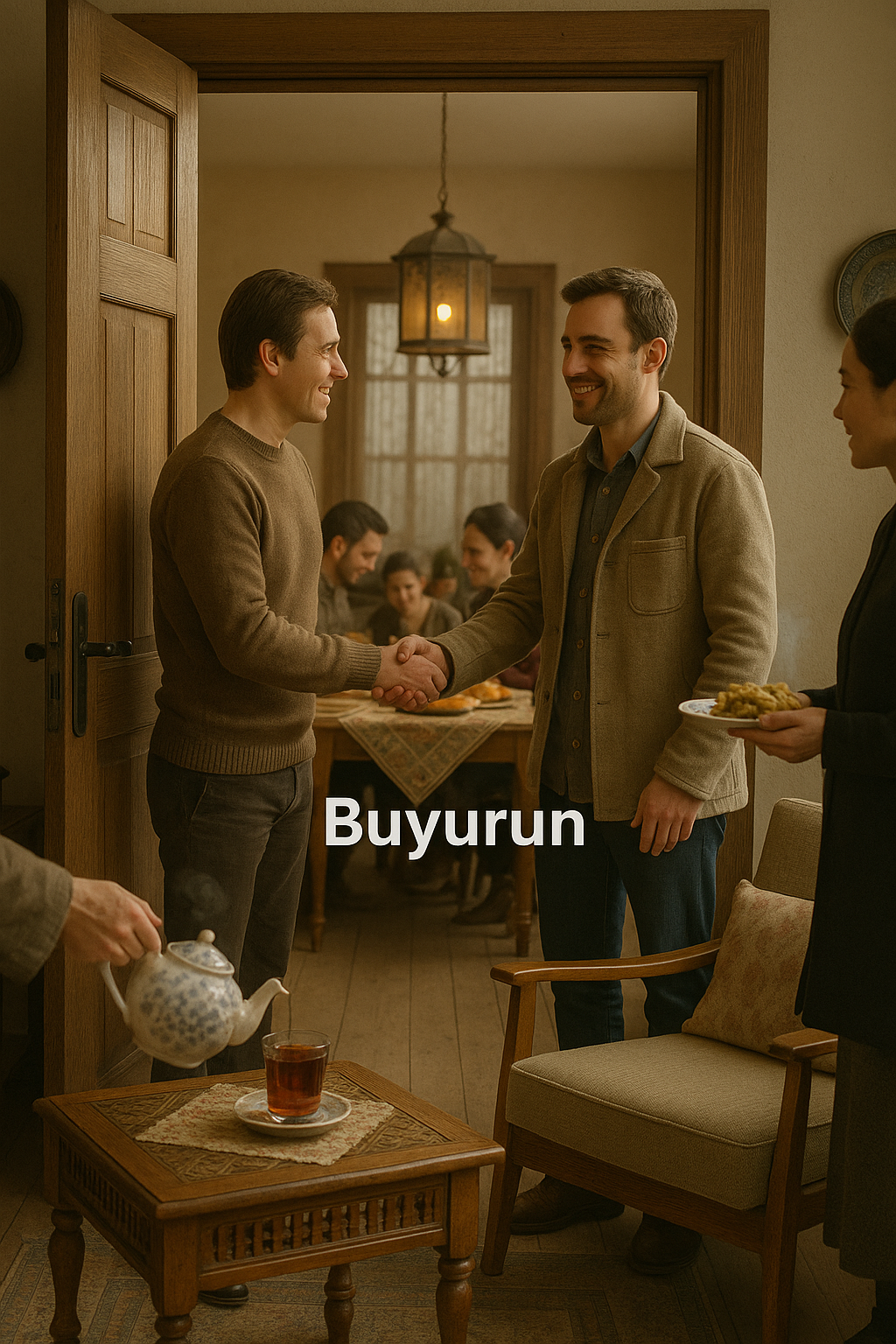
Hospitality is not an event. It’s a posture.
When people talk about Azerbaijani hospitality, they often focus on outcomes: food on the table, guests being offered everything, people insisting you stay longer.
That’s the visible part.
What’s less obvious is that hospitality starts before anything happens. It begins in language.
In Azerbaijani, hospitality is expressed through how people invite, repeat, soften, and make room for others in conversation.
Hospitality shows up in invitations, not instructions
English invitations are often efficient: “Do you want to come in?” “Let me know if you need anything.”
Azerbaijani invitations sound different.
You might hear:
- Buyurun: please, go ahead, you’re welcome
- Keçin içəri: come inside
- Əyləşin: sit down
- Narahat olmayın: don’t worry
These aren’t commands.
They’re signals of inclusion.
The language doesn’t wait for permission to be welcoming.
Repetition is care, not pressure
One of the most misunderstood parts of Azerbaijani hospitality is repetition.
You’re offered something.
You say no.
You’re offered again.
For example:
- Bir az da qalın: stay a bit more
- Tələsməyin: don’t rush
- Bir stəkan da: one more cup
To an English speaker, this can feel like pressure.
In Azerbaijani culture, the first refusal often signals modesty, not a final answer. Repeating the offer shows sincerity.
The language reflects that care through tone, not force.
Hospitality is often indirect
Azerbaijani hospitality rarely says things in the most direct way.
Instead of: “Stay longer.”
You might hear:
- Hara tələsirsiniz?: where are you rushing?
- Elə təzə gəldiniz ki: you’ve just arrived
- Bir az da oturun: sit a little longer
These are not instructions.
They’re invitations disguised as concern.
The language leaves room for choice while still expressing warmth.
Why this feels different in English
English prioritizes boundaries and clarity. Azerbaijani prioritizes presence.
That doesn’t mean Azerbaijani ignores boundaries. It just approaches them differently.
In Azerbaijani:
- Repetition can mean sincerity
- Soft insistence can mean generosity
- Silence can mean space, not discomfort
Once you recognize this, interactions stop feeling excessive and start feeling intentional.
How this connects to “Sağ ol” and “Siz”
This idea connects naturally to sağ ol and siz.
As discussed in Why Azerbaijanis Say “Sağ ol” Instead of Just “Thank You”, acknowledgment matters more than closure.
And as with siz in Understanding Respect and Formality in Azerbaijani Culture, hospitality reflects awareness before comfort.
Even small phrases like:
- Sağ olun (formal) | Sağ ol (informal)
- Buyurun (formal) | Buyur (informal)
carry respect, attention, and care without needing explanation.
A common learner mistake
Learners often respond to Azerbaijani hospitality using English logic: quick refusals, short answers, firm closures.
Nothing is wrong with that. But it can unintentionally shut down warmth.
A simple acknowledgment:
- Sağ olun
- Çox sağ olun
often matters more than whether you accept the offer.
You don’t have to accept everything. You just have to recognize it.
Hospitality in Azerbaijani is not a demand. It’s an offering.
You can say no.
You can leave early.
You can decline again.
What matters is recognizing the intention behind the words.
That’s why Azerbaijani hospitality feels generous even when nothing is taken.
Something to keep in mind
Languages don’t just describe behavior. They guide it.
Azerbaijani hospitality lives in verbs, repetition, tone, and pauses as much as in actions.
Once you start listening for that, hospitality stops feeling overwhelming and starts feeling human.