
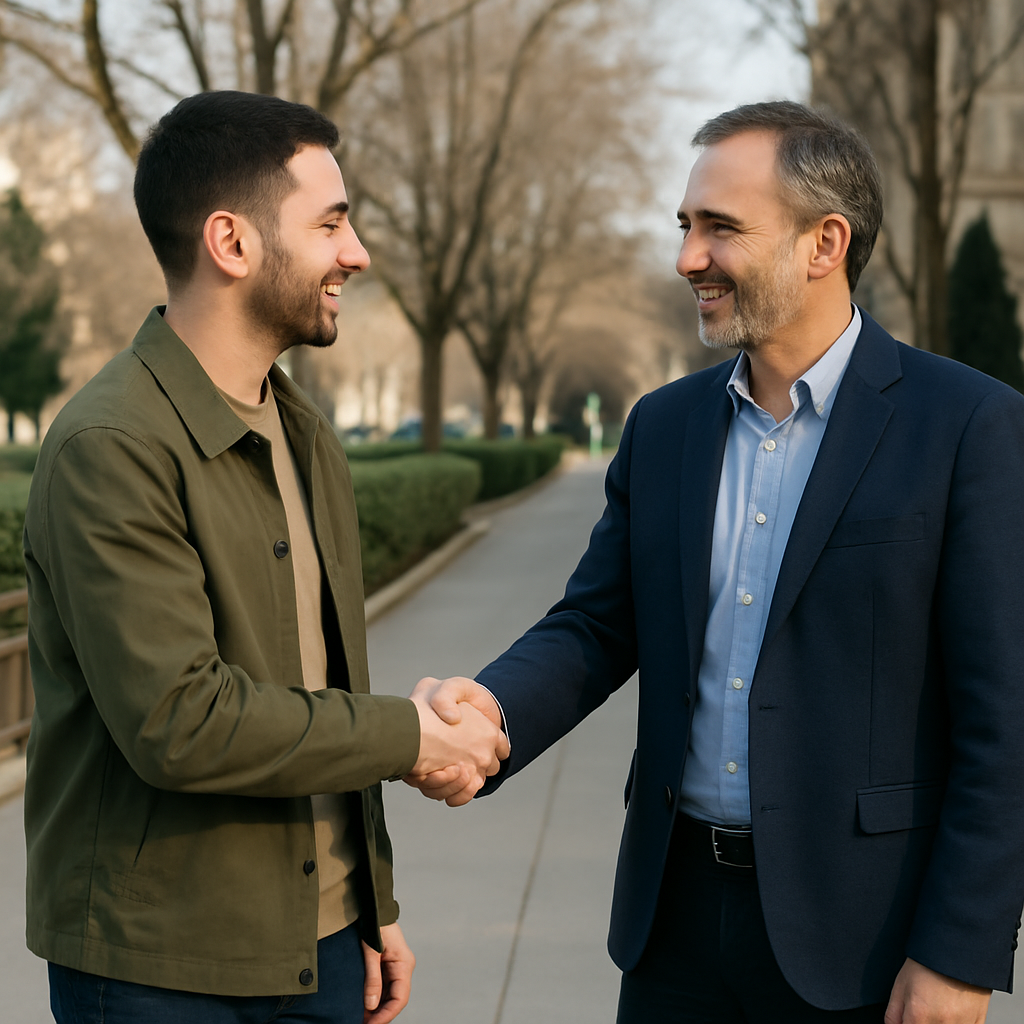
Respect is built into the language
In English, respect is mostly about tone.
You soften your voice.
You add “please.”
You choose careful wording.
In Azerbaijani, respect shows up earlier than tone.
It starts with how you address the other person.
Before you say anything meaningful, you already make a choice: sən or siz.
That choice doesn’t make a conversation cold or warm.
It makes it aware.
What “sən” and “siz” actually mean
Both words translate to you in English.
They are not interchangeable.
- sən is informal and familiar
- siz is respectful and considerate
The difference isn’t friendliness.
It’s how much relational space exists between two people.
You can be warm while using siz.
You can sound careless while using sən.
Context decides everything.
When “siz” is the natural starting point
You usually begin with siz when speaking to:
- Someone you’re meeting for the first time
- Elders
- Teachers, doctors, managers, officials
- Anyone outside your close circle
This isn’t excessive politeness.
It’s a way of acknowledging the other person before assuming closeness.
Starting with siz signals:
- I’m paying attention
- I’m not rushing familiarity
- I’m reading the situation
If you’re unsure which one to use, siz gives the conversation room to settle.
When “sən” becomes natural
You use sən when a sense of closeness is there.
That closeness is not defined only by age, status, or rules. It comes from something less visible.
In Azerbaijani culture, the switch from siz to sən usually happens when an unspoken connection forms. When the conversation starts to feel easy. When distance softens on its own.
Sometimes the shift is obvious.
Sometimes it happens quietly.
Sometimes, no one can point to the exact moment it changed.
What matters is not who initiated it, but whether the relationship supports it.
Switching to sən just because you personally feel comfortable can feel early.
Staying with siz until the connection is there rarely feels wrong.
Warmth does not require informality
A common misunderstanding is that siz sounds cold.
In reality, Azerbaijani speakers can be warm, humorous, and emotionally present while still using siz.
Respect and warmth often exist together.
One doesn’t cancel the other.
That’s why conversations can feel personal even before language becomes informal.
Why English speakers often misread this
English has only one “you.”
That means politeness in English relies heavily on tone and phrasing. Azerbaijani relies more on structure first, tone second.
This is why English speakers sometimes sound overly casual without realizing it. The sentence may be polite, but the address skips a step.
Once you understand sən vs siz, Azerbaijani conversations start making more sense.
This shows up beyond pronouns
Choosing sən or siz affects more than one word.
- Verb forms adjust.
- Directness shifts slightly.
- The rhythm of speech changes.
These aren’t rigid rules. They’re subtle signals that help conversations stay balanced.
How this connects to “Sağ ol.”
In my earlier post, Why Azerbaijanis Say “Sağ ol” Instead of Just “Thank You”, I wrote about how acknowledgment matters more than transaction.
The same cultural logic applies here.
Siz, like sağ ol, is relational.
It reflects awareness of the person, not just the moment.
Azerbaijani often encodes that awareness directly into language instead of leaving it unsaid.
A common learner mistake
Many learners think using sən makes them sound more fluent.
It doesn’t.
Fluency in Azerbaijani isn’t about sounding casual.
It’s about choosing the right level of closeness.
Using siz naturally and switching when the connection is real will always sound more authentic.
A simple guideline that works
If you remember one thing, remember this:
Start with siz not to create distance, but to create clarity.
Connection shortens the distance on its own.
Language follows.
What Sən and Siz Teach Learners
Languages don’t just describe meaning. They reflect how people relate to each other.
Sən and siz exist because awareness matters before comfort in Azerbaijani culture.
Once you feel that, conversations stop sounding translated and start sounding natural.
Keep Learning Azerbaijani in Real Context
Words like sən and siz only make sense when you learn them inside real situations: who is speaking, how close they are, how formal the setting is, and what kind of respect is expected.
The Master Azerbaijani app starts with the foundations, then builds toward real phrases, pronunciation, grammar, cultural context, and everyday communication step by step.