
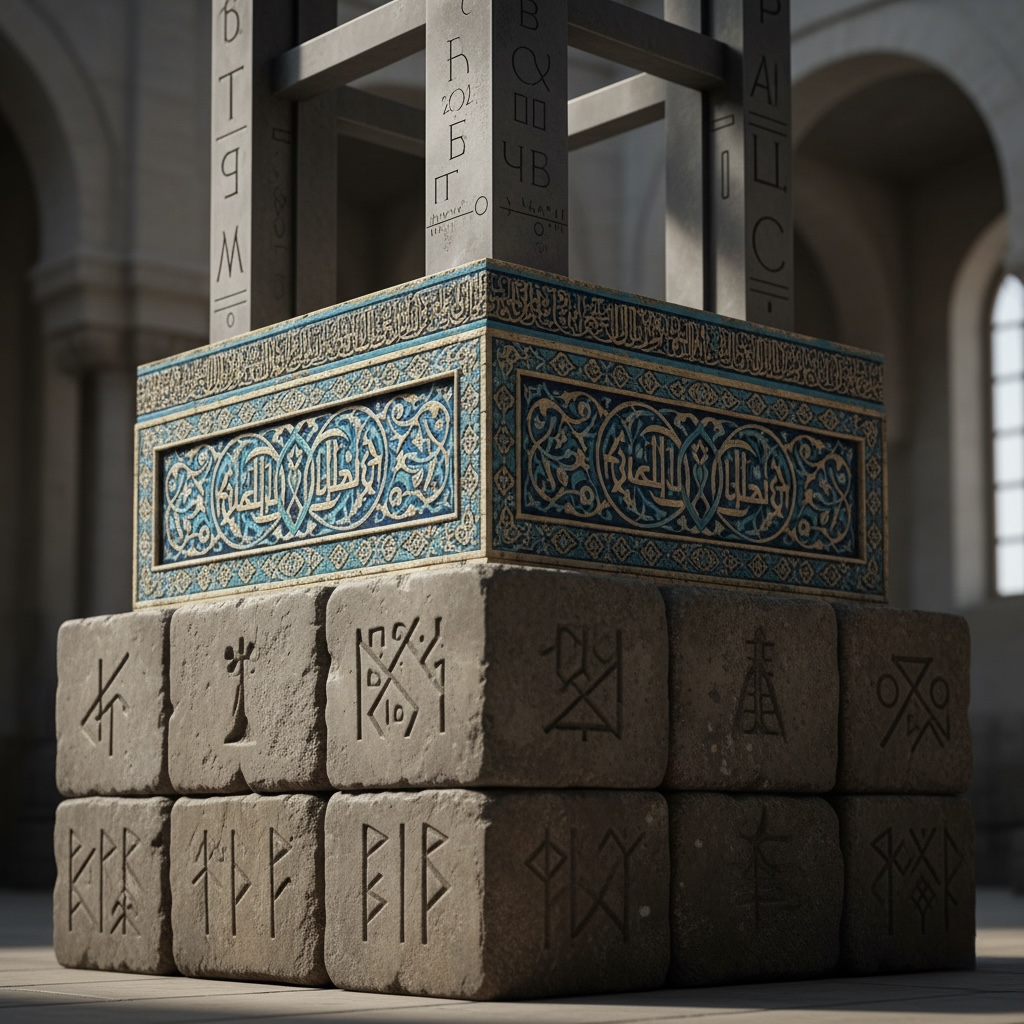
Languages Do Not Evolve in a Vacuum
Modern Azerbaijani is the result of centuries of contact, pressure, adaptation, survival, and literary exchange.
This matters because not all influence works the same way.
Some languages shape grammar.
Some contribute vocabulary.
Some dominate institutions through power.
Azerbaijani experienced all three.
Understanding this history does not mean treating Azerbaijani as a “mixed” or “borrowed” language. Every language on earth is influenced by others. The question is how those influences entered, where they stayed, and what they did not replace.
Turkic Foundations: The Structural Core
Azerbaijani is, first and foremost, a Turkic language.
This is not a cultural label. It is a structural fact.
Its core grammar reflects Turkic logic:
- Agglutinative word formation
- Vowel harmony
- Subject–Object–Verb order
- No grammatical gender
- Meaning built through suffixes, not prepositions
Examples:
- ev → evlər → evlərimiz → evlərimizdən
- getmək, yazmaq, oxumaq
These patterns are inherited, not borrowed.
They determine how Azerbaijani works at a fundamental level.
No later influence replaced this structure.
Everything else entered around it.
Persian Influence: Literature, Prestige, Expression
Persian influence in Azerbaijani is primarily vocabulary, literary style, and cultural expression, not core grammar.
From roughly the medieval period through the early modern era, Persian functioned as a prestige language across much of the region. It dominated:
- Poetry
- Court literature
- Scholarly writing
- High cultural expression
Many Azerbaijani poets were bilingual, and literary education often passed through Persian. As a result, Azerbaijani absorbed Persian-derived vocabulary especially in abstract, emotional, philosophical, and literary domains.
Common Persian loanwords still used today include:
- bazar
- dost
- rəng
- gül
- şəhər
These words feel natural now because they have been integrated for centuries. They follow Azerbaijani phonology and behave according to Turkic grammar.
Important distinction:
Persian did not shape Azerbaijani sentence structure.
It shaped how ideas were expressed, not how sentences were built.
That influence added depth and stylistic range, not dependency.
Russian Influence: Institutions, Power, and Standardization
Russian influence is the most recent, and the most politically charged.
Under the Russian Empire and later the Soviet Union, Russian became the dominant language of:
- Higher education
- Science and engineering
- Administration
- Industry
- Military and state institutions
This was not organic contact between communities.
It was top-down pressure tied to power and opportunity.
As a result, Azerbaijani absorbed Russian-based vocabulary in formal and institutional contexts, including words such as:
- direktor
- institut
- protokol
- fabrika
- pensiya
These terms entered through bureaucracy, education, and professional life. Even when Azerbaijani equivalents existed, Russian-derived forms often carried more institutional weight.
This influence extended beyond vocabulary.
Russian administrative norms affected:
- Formal writing style
- Academic tone
- Official phrasing
- Perceptions of what sounded “professional.”
This is not abstract history.
Its effects are still felt today.
For a deeper breakdown of how Soviet policies reshaped Azerbaijani scripts, vocabulary, and language hierarchy, see: How Soviet History Changed the Azerbaijani Language
Script Changes Amplified External Influence
Influence is easier to impose when writing systems are unstable.
In just over a century, Azerbaijani moved through:
- Arabic-based script
- Latin
- Cyrillic
- Modern Latin again
Each change disrupted continuity.
Script reforms were never purely linguistic decisions. They affected:
- Which texts remained accessible
- Which generations could read which materials
- Which languages felt closer or more distant
By the time Azerbaijani returned to Latin script after independence, layers of influence were already embedded in education, administration, and formal writing.
What Modern Azerbaijani Actually Represents
Modern Azerbaijani is not defined by Persian or Russian.
Like all living languages, it has been influenced by contact, while retaining its core system.
It remains:
- Turkic in grammatical structure
- Enriched by Persian literary tradition
- Influenced by Russian in technical and institutional domains
- Written today in a Latin script designed for clarity and accessibility
This is not unusual.
English carries Norman French and Latin layers.
Spanish carries Arabic influence.
German carries French and Latin prestige vocabulary.
Azerbaijani is no exception. It is simply honest about its history.
What This Means for Learners
If you are learning Azerbaijani today, you may notice:
- Multiple words for similar concepts
- Formal expressions that feel distant from everyday speech
- Generational differences in tone and vocabulary
- Textbooks that sound more bureaucratic than conversational
These are not mistakes.
They are historical layers.
Once you recognize which parts of the language come from structure and which come from influence, Azerbaijani becomes easier to navigate, not harder.
Influence Is Not Replacement
Influence does not mean replacement.
Borrowing does not mean loss.
Azerbaijani did not disappear under outside influence.
It adapted, absorbed selectively, and moved forward.
The result is not confusion, but depth.
And understanding that depth is one of the fastest ways to learn the language well.
Keep Learning Azerbaijani With Context
If you are learning Azerbaijani, these historical layers matter because they explain why some words feel formal, some sound literary, and some belong more naturally to everyday speech.
The Master Azerbaijani app starts with the foundations, then builds toward real phrases, pronunciation, grammar, cultural context, and everyday communication step by step.