
Novruz is not just a holiday. It is cultural literacy.
If you are learning Azerbaijani and you skip Novruz, you are missing the cultural backbone of the language.
This is not just a holiday. Novruz explains why people speak the way they do, why hospitality is non-negotiable, why certain phrases exist, and why food, fire, and family keep showing up in everyday Azerbaijani conversations.
Novruz marks the arrival of spring and the new year, celebrated on March 20–21. But calling it “Persian New Year” and moving on is lazy. In Azerbaijan, Novruz has its own rituals, rules, and emotional weight. If you want to sound like someone who understands the language, not just memorize words, you need to understand Novruz.
Let’s break it down properly.
What “Novruz” Means
Novruz comes from Persian roots, meaning new day. In Azerbaijani, it is written and pronounced exactly as Novruz.
But linguistically, the meaning goes beyond a calendar reset. It represents:
- Renewal
- Clean starts
- Balance with nature
- Community before individualism
In Azerbaijani culture, a new day is not something that just arrives. It is prepared for. Cleansed for. Spoken into existence.
That is why Novruz traditions involve declaring wishes, avoiding negative language, listening carefully, and choosing words intentionally.
On Novruz, language is not decoration.
It is an action.
The Four Tuesdays Before Novruz (Çərşənbələr)
Many English explanations skip this. They shouldn’t.
Because the weeks leading up to Novruz are just as important as the day itself.
Each of the four Tuesdays before Novruz is called a Çərşənbə, representing an element waking up nature step by step:
- Su Çərşənbəsi – Water
- Od Çərşənbəsi – Fire
- Yel Çərşənbəsi – Wind
- Torpaq Çərşənbəsi – Earth
By the final Tuesday, the nature and the earth are considered fully ready for renewal. Novruz is not a sudden change. It is gradual readiness.
Jumping Over Fire and Speaking It Out Loud
On every Çərşənbə (Tuesday), small fires are lit, and people jump over them.
While jumping, many people say:
“Ağırlığım-uğurluğum odda yansın.”
Literal meaning: “May my hardship and misfortune burn in the fire.”
In English, this is often explained as: “My misfortune goes into the fire, my luck comes back to me.”
This is not superstition for show. It is a verbal declaration of renewal. Fire is not destruction. It is a transformation.
Səməni: The Quiet Symbol of Growth
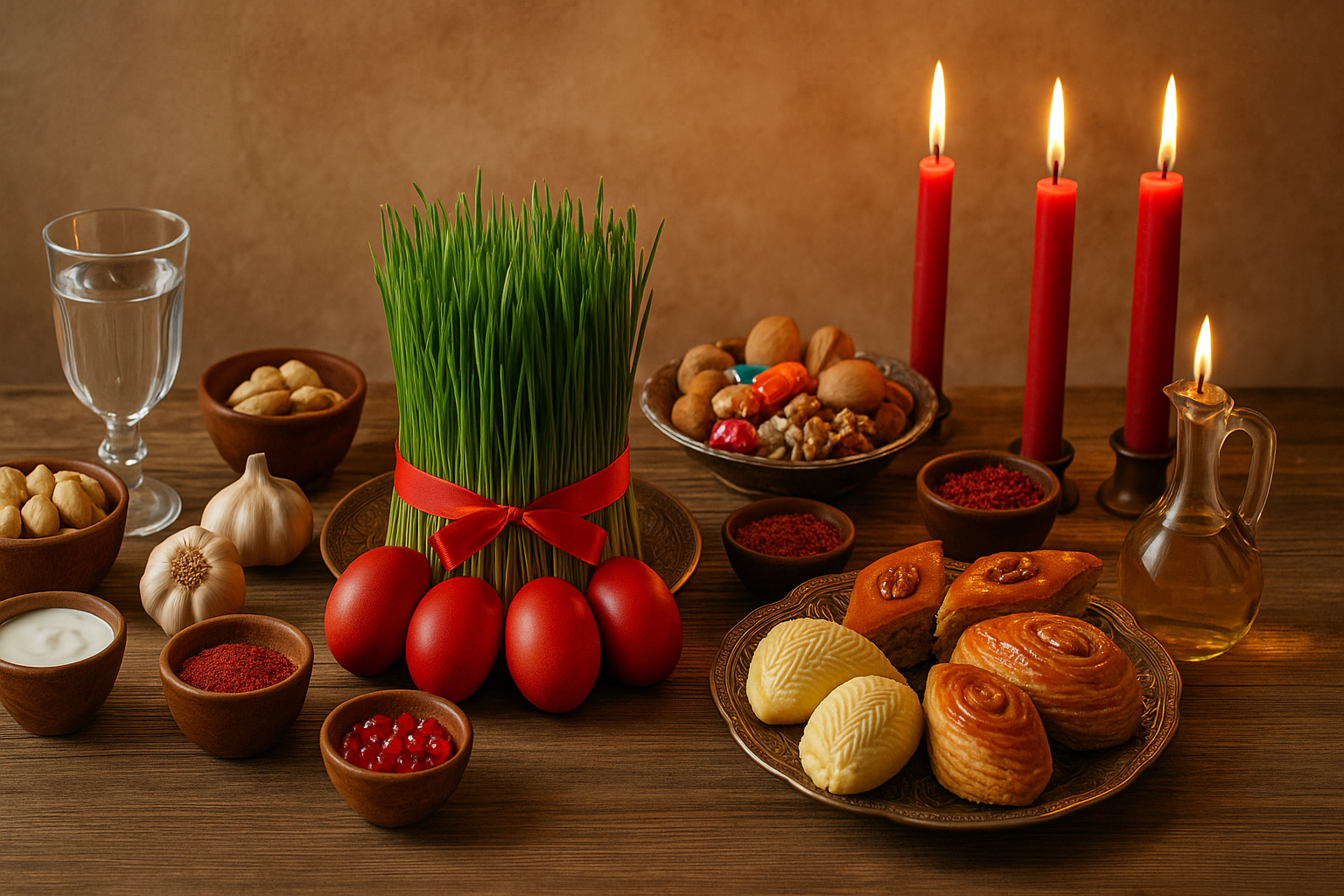
Səməni is sprouted wheat grown before Novruz and placed on the holiday table.
It represents:
- Life
- Growth
- Continuity
- Patience
Today, səməni is widely sold ready-made, especially in cities. But traditionally, families grow it themselves.
Buying səməni gives you the symbol.
Growing it gives you the experience.
Watching it sprout over days is part of the philosophy of Novruz: renewal takes time.
The Novruz Table and the “Seven S” Items
Novruz tables traditionally include seven symbolic items, often associated with words starting with the letter S. These items are connected to meaning and intention, not strict decoration, and they do not all have to sit on the table.
Commonly referenced items include, but are not limited to:
- Səməni: life and growth
- Su: cleansing and renewal
- Süd: purity
- Sirkə: patience and endurance
- Sumax: sunrise and rebirth
- Sarımsaq: protection
- Şam: light and clarity, lit up as per the number of people in the family.
Not every household follows the exact same list today. What matters is symbolism, balance, and intention.
Novruz Sweets and What They Actually Represent
Novruz sweets are not interchangeable desserts. Each has a specific symbolic meaning tied to celestial elements:
-
Paxlava: layered, nut-filled pastry representing stars
Its diamond pattern reflects star shapes and destiny. -
Şəkərbura: sweet pastry filled with ground nuts, representing the moon
Its half-moon shape symbolizes balance and continuity. -
Qoğal: sweet or spiced layered pastry, representing the sun
Its round shape and golden color symbolize warmth, energy, and life.
Together, they represent harmony between the sun, moon, and stars. When someone insists, and you hear something like “Bir dənə də ye,” it is not pressure. It is care.
Egg Tapping (Yumurta döyüşdürmək)
Eggs are dyed and tapped against each other during Novruz.
In Azerbaijani tradition, the egg symbolizes abundance and prosperity. And egg tapping represents the victory of good over evil.
Children and adults tap dyed eggs against each other. The unbroken egg “wins,” symbolizing resilience and positive outcomes for the coming year.
Papaqatdı: Asking Without Asking
One of the most loved Novruz traditions is papaqatdı.
Children place a hat or bag in front of a neighbor’s door, hide, and wait. The homeowner fills it with sweets or treats.
No knocking. No words. The act itself is the request.
It reinforces generosity without direct asking, a value deeply rooted in Azerbaijani culture.
Qapı Pusmaq: Listening and Interpreting Words
Another tradition is qapı pusmaq, or listening at doors.
People quietly listen to conversations and interpret what they hear as signs for the coming year. Because of this, families intentionally speak positively on Novruz night and avoid negative topics.
This tradition highlights a core belief: words can shape outcomes.
Visiting, Inviting, Insisting
During Novruz, people:
- Visit relatives
- Invite neighbors
- Leave doors open longer
- Expect guests
Hospitality during Novruz is not optional.
For learners, this explains why Azerbaijani has so many invitation phrases and polite insistence forms. When someone says “Buyurun” or “Əyləşin,” they genuinely mean it. Saying no too fast can feel cold.
For a deeper look at these words and how they’re actually used, see Understanding Azerbaijani Hospitality Through Language.
Why All This Matters for Azerbaijani Learners
Novruz is one of the clearest examples of how language functions in Azerbaijani culture.
It explains:
- Why words are taken seriously
- Why do people avoid negativity at specific moments
- Why wishes are spoken out loud
- Why listening matters as much as speaking
For learners, Novruz is a reminder that language is not only grammar and vocabulary. It is timing, intention, and meaning.
Final Thought
If you are learning Azerbaijani, don’t treat Novruz like a holiday you “read about.” Treat it as a cultural grammar lesson.
Once you understand Novruz, the language starts making sense in ways textbooks never explain. And that is the difference between knowing Azerbaijani words and actually understanding Azerbaijani people.