
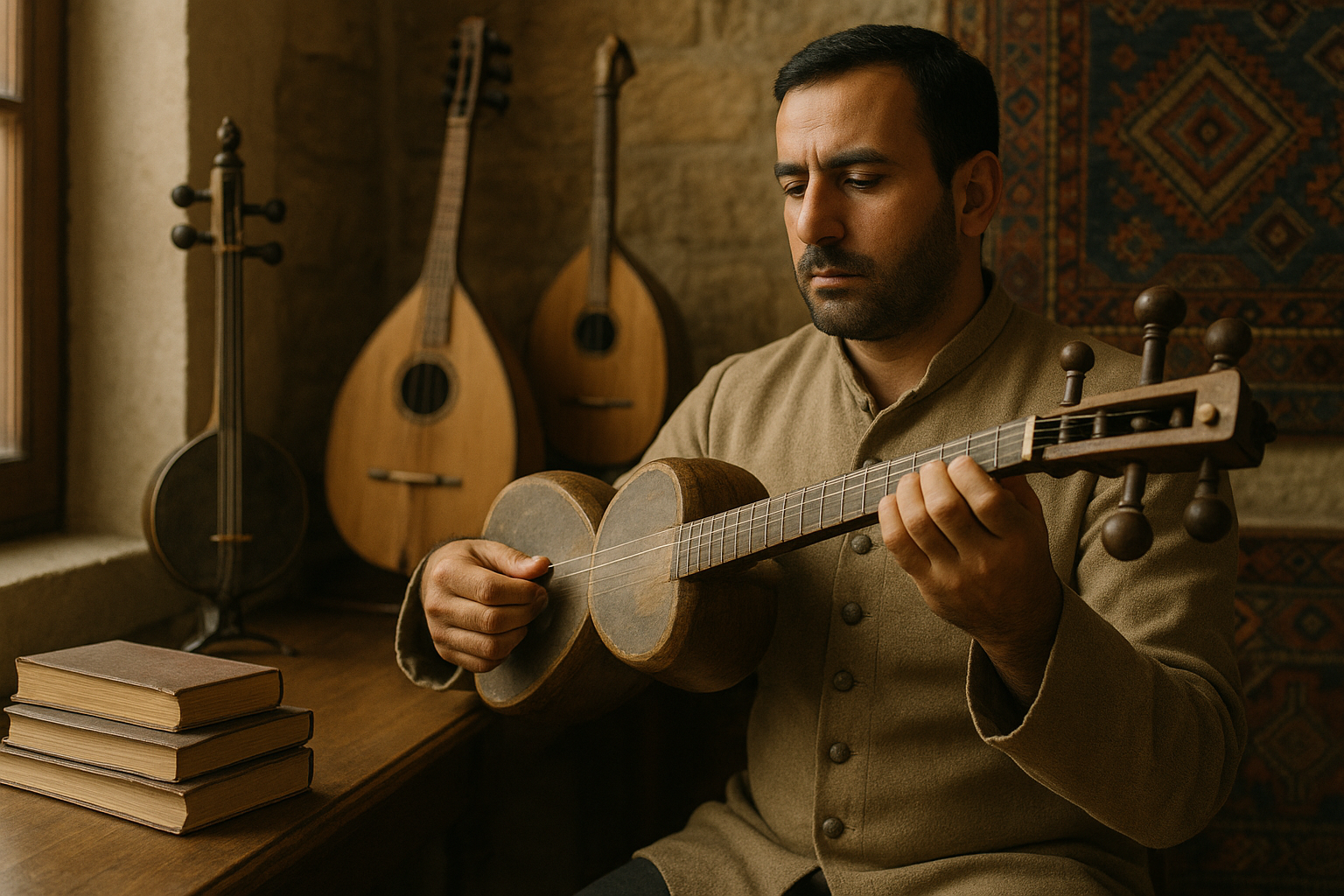
Language Does Not Live in Textbooks
Language lives in sound.
In rhythm.
In repetition.
That is why music is not an optional add-on when learning Azerbaijani.
It is one of the most efficient accelerators you have.
If your learning relies only on grammar explanations and vocabulary lists, you are missing the part that trains your ear. This is the same reason many learners look for ways to learn Azerbaijani without relying on textbooks alone.
Music gives you something written material cannot:
- Natural stress and intonation
- Real sentence rhythm
- Emotional context
- Memory hooks that bypass translation
For Azerbaijani, this matters more than people expect.
Why Music Works for Language Learning
Music and language are processed in overlapping parts of the brain.
When you listen to songs, you are not just hearing words. You are absorbing:
- Stress placement
- Sound length
- Pitch movement
- Emotional emphasis
Azerbaijani is:
- Highly phonetic
- Vowel-rich
- Rhythmically consistent
This makes it especially responsive to music-based learning.
Your ear adapts before your brain starts questioning everything.
Azerbaijani Music Is Built Around Language
In Azerbaijani music, words are not decoration.
They are the core instrument.
Lyrics carry meaning.
Delivery carries intention.
This makes music an unusually effective training ground for learners who want to move beyond robotic speech and toward perfect Azerbaijani pronunciation.
You hear how sounds stretch, soften, harden, or compress depending on emotion and context.
Muğam (Mugham) Trains the Ear, Not the Vocabulary
Muğam is slow, layered, and emotionally dense.
It is not designed for beginners, but it teaches something fundamental.
Muğam exaggerates:
- Vowel length
- Stress
- Intonation curves
This forces you to hear sounds clearly and distinctly.
You do not need to understand every word.
You need to let your ear get used to how Azerbaijani moves.
Think of Muğam as pronunciation training disguised as art.
Folk Songs Teach Patterns You Actually Use
Traditional folk songs are where learners quietly win.
They rely on:
- Repetition
- Simple sentence structures
- Common verb forms
- Everyday emotional expressions
You will hear patterns for:
- Requests
- Wishes
- Commands
- Storytelling in the past tense
These same structures are harder to remember when taught in isolation.
In songs, they stick.
Modern Azerbaijani Music Bridges Reality
Modern Azerbaijani music reflects how people actually speak.
Not textbook Azerbaijani.
Not overly formal Azerbaijani.
Real Azerbaijani.
You will hear:
- Shortened words
- Natural reductions
- Casual phrasing
This is not incorrect language.
It is fluent language.
Exposure here prepares you for real conversations instead of freezing when speech does not match what you studied.
Music Reinforces the Alphabet in Practice
Azerbaijani spelling is consistent.
But hearing it in motion matters.
If you already learned the Azerbaijani alphabet, music helps lock in:
- Letter–sound consistency
- Vowel clarity
- Consonant strength
This is where reading knowledge turns into listening confidence.
How to Use Music Without Wasting Time
Listening passively is not enough.
Use music intentionally.
Step 1: Choose One Song
Do not jump between tracks.
Pick one song and stay with it.
Familiarity beats variety.
Step 2: Listen Without Lyrics
Focus on:
- Sounds
- Stress
- Repeated phrases
- Emotional cues
Let your ear adjust first.
Step 3: Read the Lyrics Later
Once the song feels familiar:
- Read the lyrics
- Identify known words
- Notice sentence structure
You will recognize more than you expect.
Step 4: Speak Along
Say the words out loud.
Imitate the singer.
Accent first. Accuracy later.
If it feels uncomfortable, that means it is working.
Music Teaches Cultural Intuition
Language is not just information.
It is attitude.
Azerbaijani music carries:
- Emotional restraint
- Pride without exaggeration
- Melancholy without self-pity
Listening teaches you when to sound soft, firm, or restrained. This is the layer that grammar never explains, but native speakers instantly feel.
Build Your Ear, Not Just Your Vocabulary
If Azerbaijani stays in your head but refuses to come out naturally, music may be the missing bridge.
Not because it is entertaining.
Because it trains your ear, memory, and intuition at the same time.
Textbooks build structure.
Music builds instinct.
And Azerbaijani, more than many languages, lives in its sound.
Keep Practicing With Real Azerbaijani Audio
Music is a powerful way to train your ear, but it works best when you also practice clear, structured Azerbaijani sounds and phrases.
The Master Azerbaijani app starts with the foundations, then builds toward greetings, real phrases, pronunciation, grammar, and everyday communication step by step.